Synthera Systems · Hulhumalé, Maldives
Systems thinking.
Shipped as software.
We map how every part of an operation affects the rest, then build software that keeps it working and keeps solving its problems.
Explore the systemsThe Synthesised
Era.
Synthera joins synthesis and era: an era in which people combine what they know to solve harder problems. Three disciplines carry that into everything we build.
- Purpose
Help people build better.
Software should make the people using it more capable. We connect what they already know and build tools they can rely on.
- Vision
A more connected world.
Better tools change how people design, build and live. That change starts with one specific problem for one specific customer.
- Mission
Make complex systems understandable.
We turn a complex operation into one system its people can see and run: a resort on one realtime core, a company on one live ledger, many schools on one codebase.
- Promise
Technology that leaves people in charge.
Clear screens, dependable behaviour and the record behind every answer an assistant gives, so a person can check it before acting on it.
-
Design thinking.
What do people need, and why does it matter?
We learn the experience first, explore alternatives and test them as prototypes.
-
Systems thinking.
How do the parts and their context influence one another?
We trace dependencies, feedback and boundaries before a change lands.
-
Systems engineering.
How do we build a solution that fulfils its purpose, and keep it doing so?
We write the requirements, design the architecture, integrate the parts and keep the evidence for the life of the product.
Our current
lineup.
Each one follows the same method: specify, gate, prove. Dhuvo is the one still in build.
-
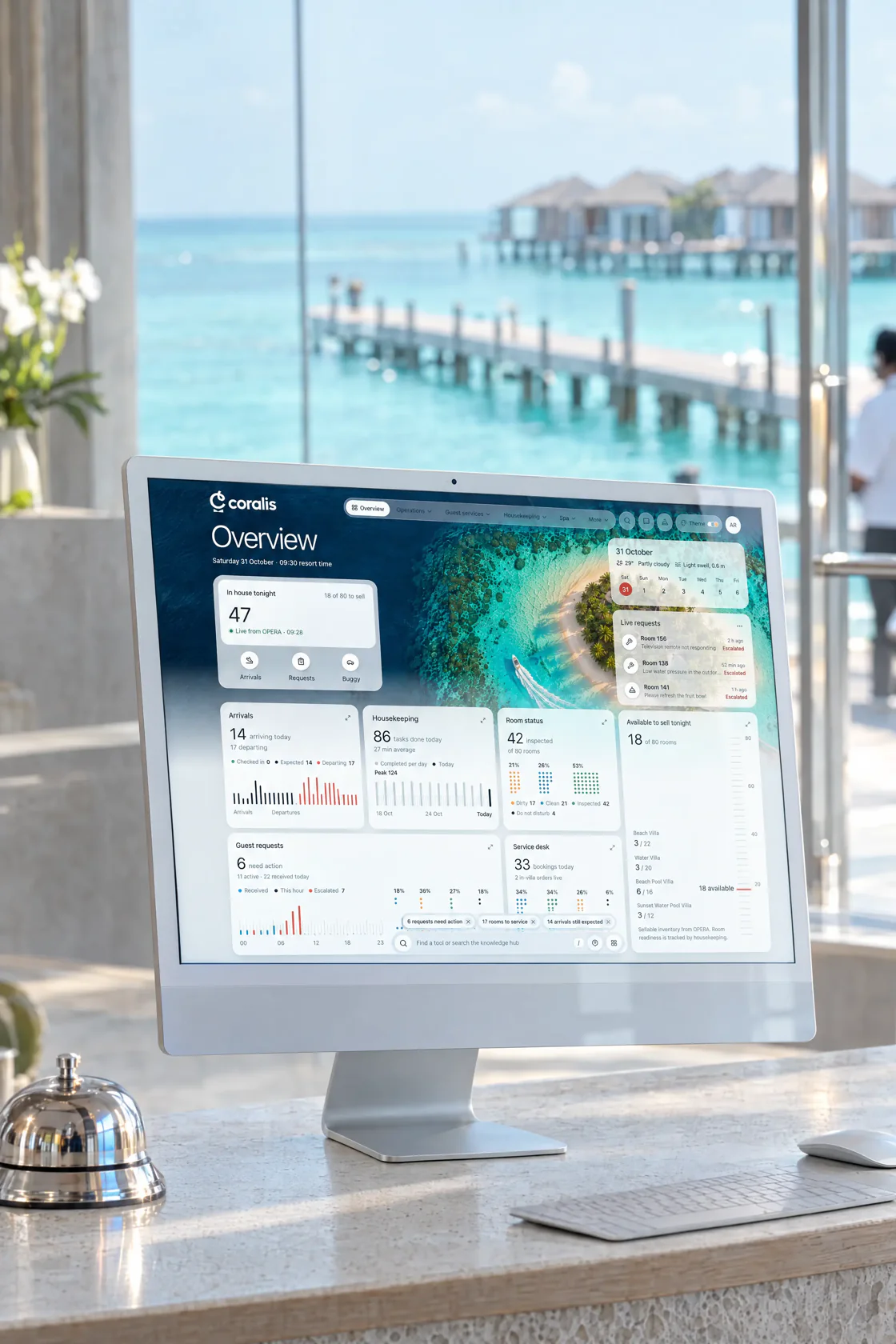
Coralis
The operating and management layer of a resort.
Your whole resort, moving as one. Guests check in, order dinner and call a buggy from their phone, and every team from housekeeping to the spa sees it the moment it happens.
-
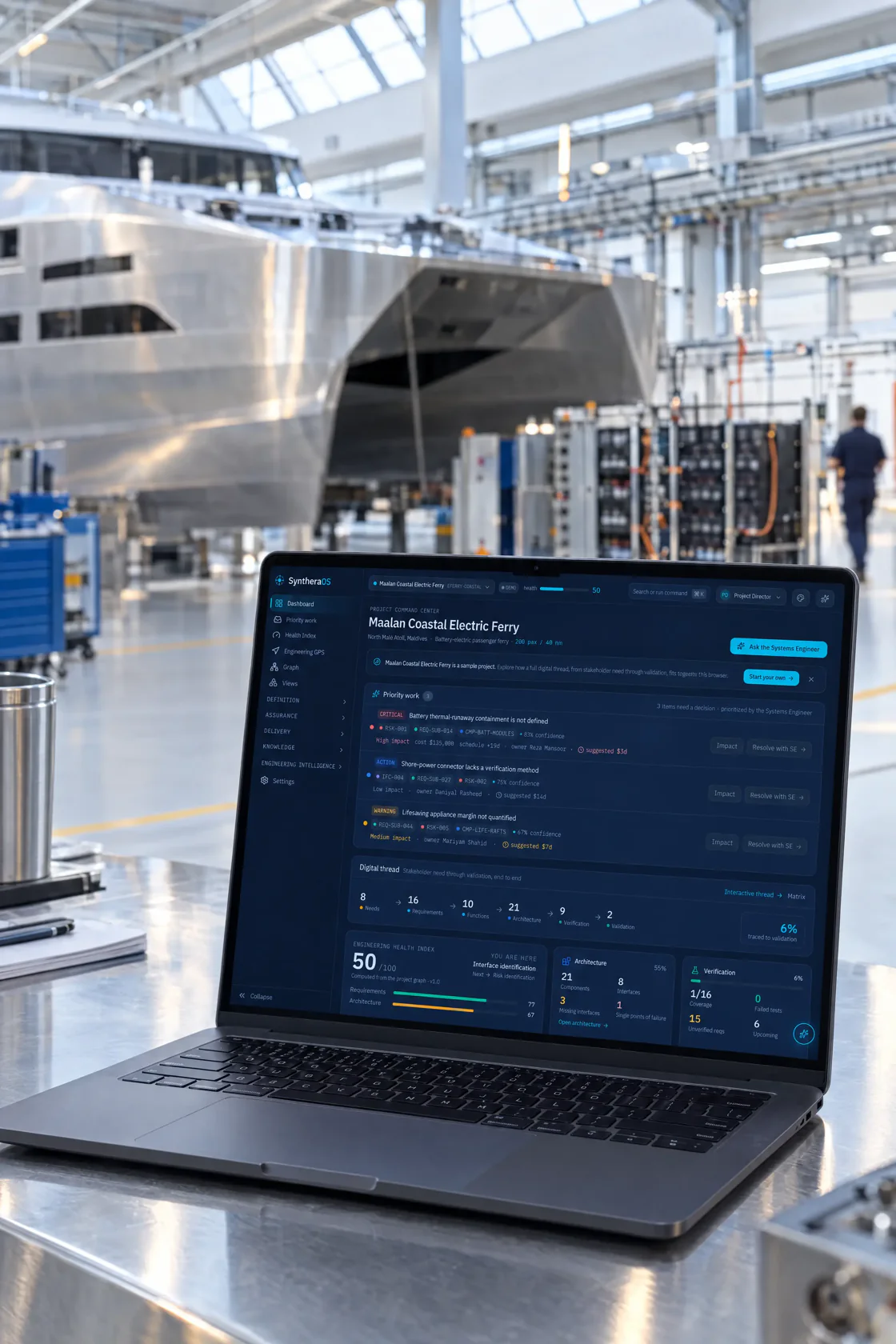
SyntheraOS
A graph-native operating system for systems engineering.
Built for critical engineering, on projects and in controlled environments. Every requirement, risk and test lives on one connected model, grounded in the international standards that aerospace and defence programmes run on.
-
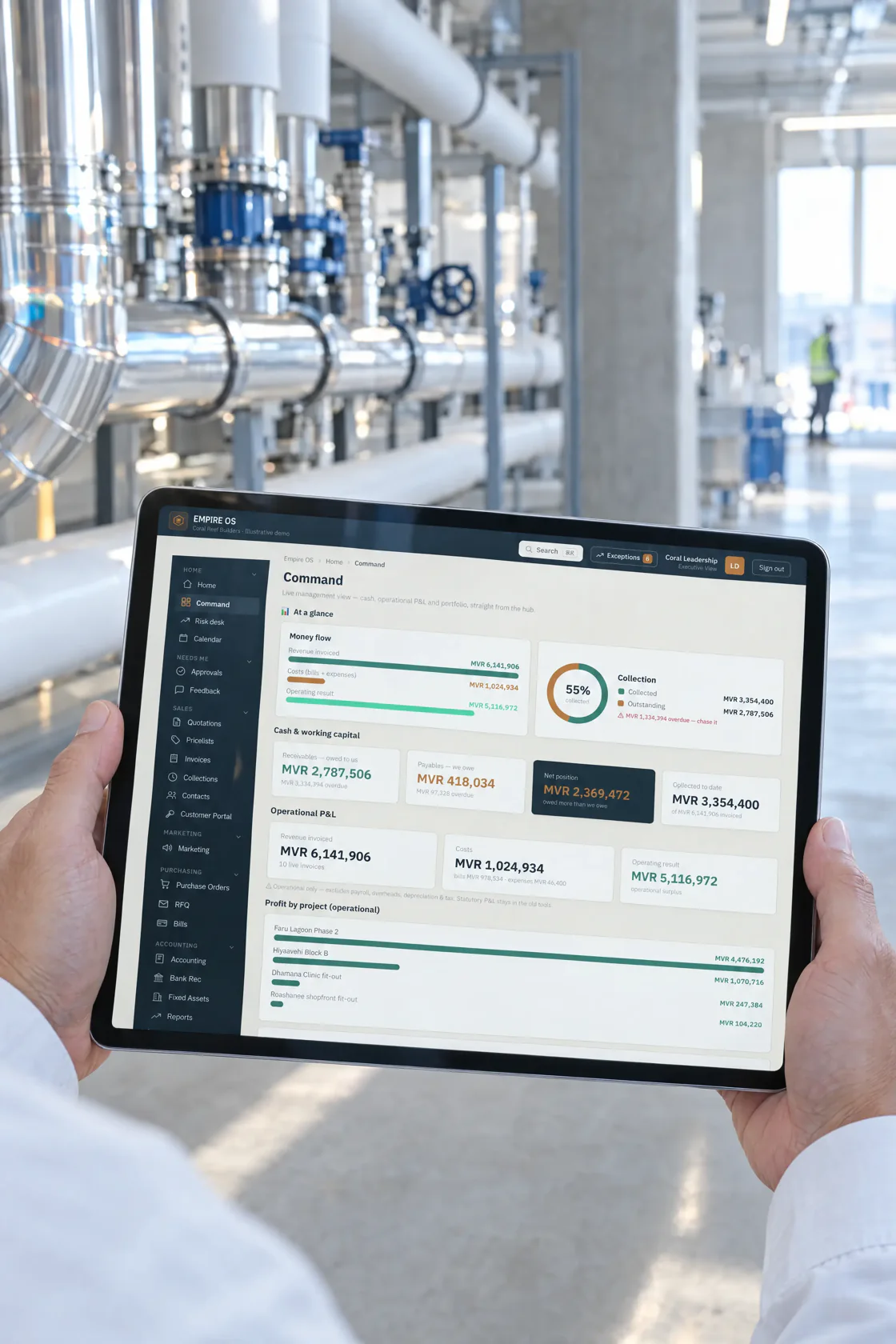
Empire OS
One operating system for any kind of business.
Sales, books, payroll and tax on one live ledger. Empire OS adapts to how your business works, whatever the field.
-
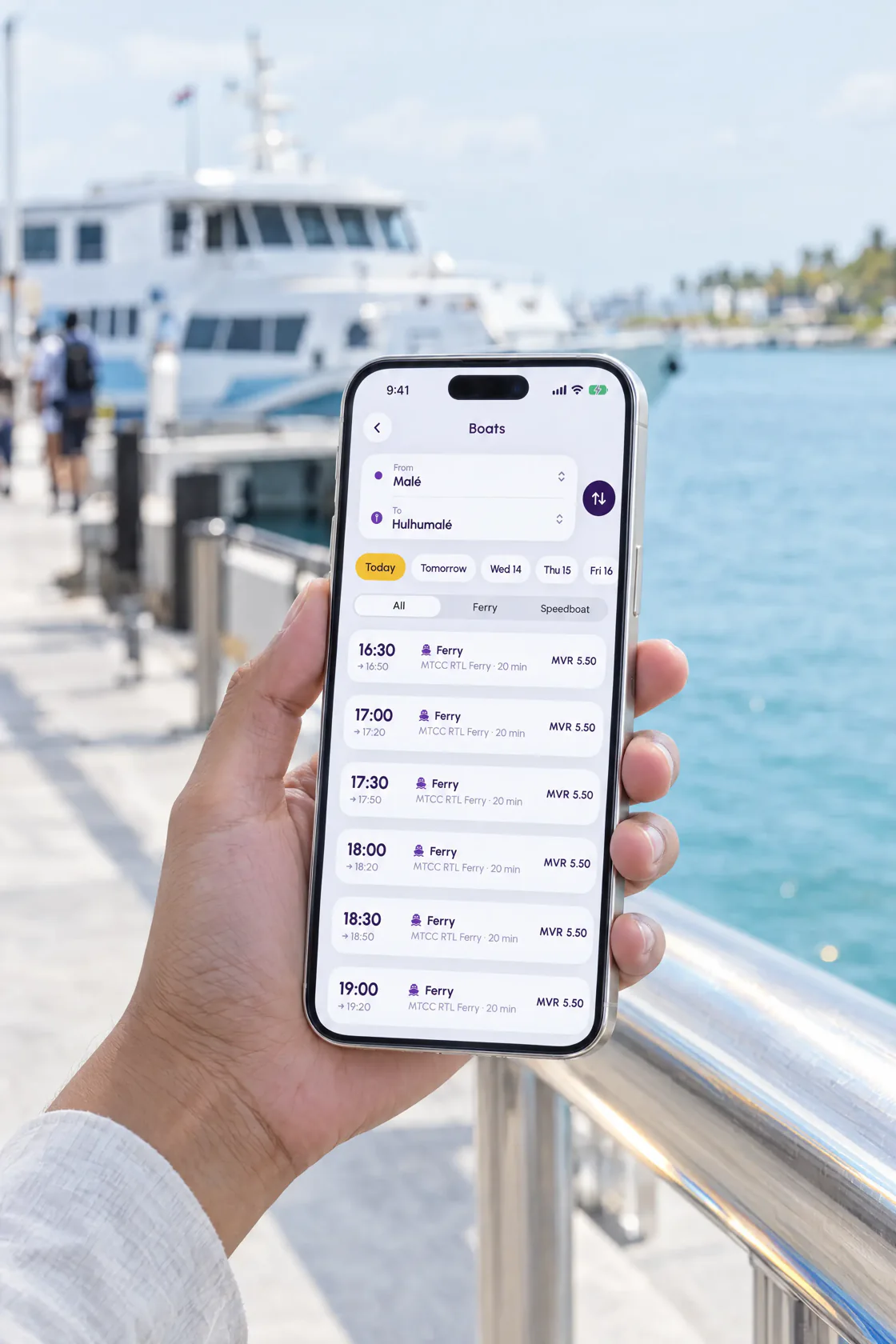
Dhuvo In build
Everyday services on one account and one wallet.
Rides, boats, food, shopping, bills, top-ups and parcels, built as one family of services on shared dispatch, commerce and bookings engines. Customer and partner apps on iPhone and Android.
-
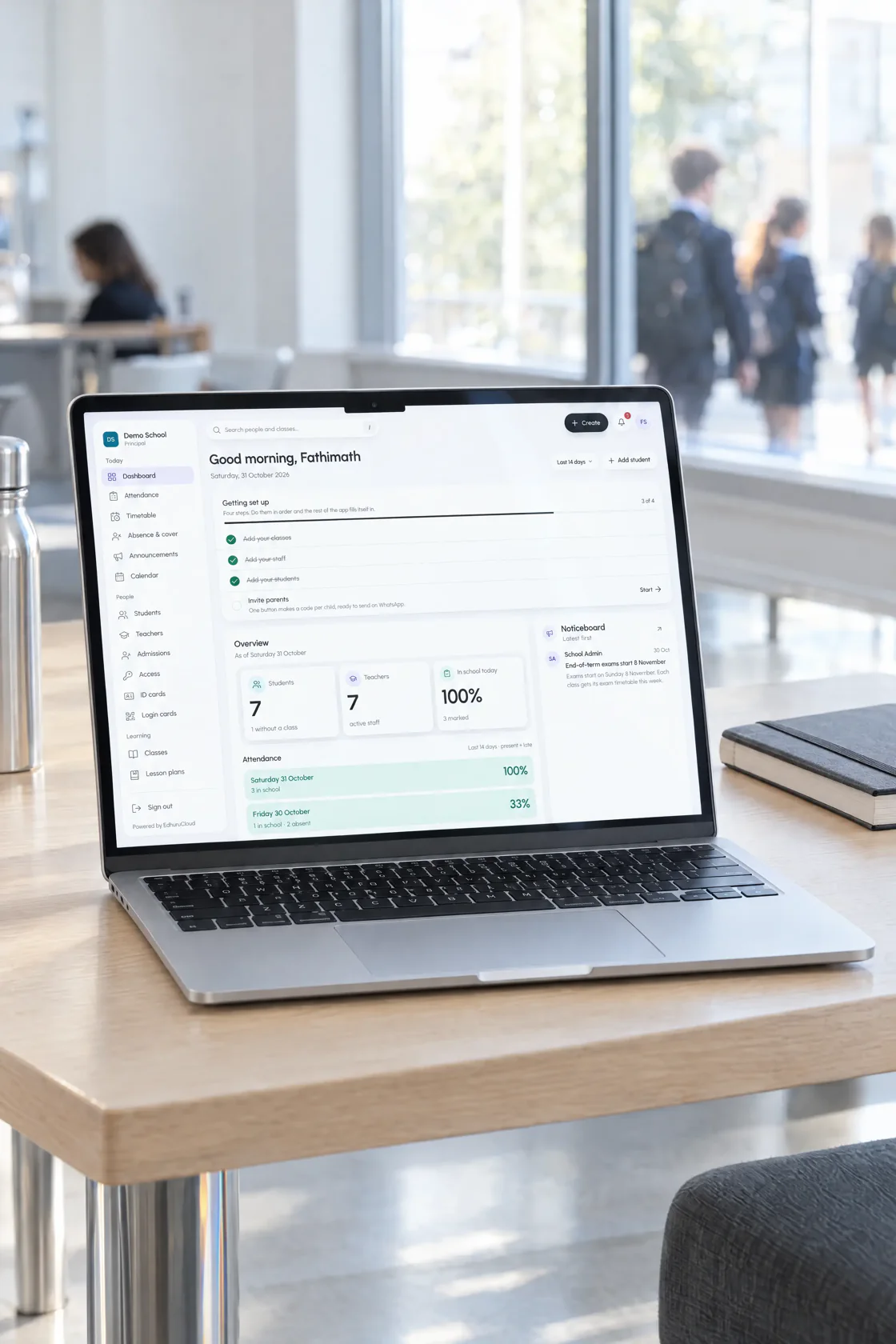
EdhuruCloud
The easier way to run a school.
Registers, cover, report cards, fees and messages home in one place, for schools, preschools and tuition centres. The mark a teacher enters is the mark the parent sees.
-
EzeeHR Coming soon
HR, attendance and payroll as one system.
Staff clock in with a fingerprint or their phone, and leave requests move through each level of approval. On payday, the payslips, pension and bank sheets are ready, Ramadan hours and all.
The hard parts,
engineered.
-
Offline-first by design.
Plant rooms have no signal. Coralis engineering rounds sync when it returns, with no lost or duplicated readings.
-
Statutory logic as code.
Empire OS encodes Maldivian GST, green tax, pension and withholding: 30 rates and 13 statutory deadlines, calculated to the laari.
-
Change impact before commitment.
SyntheraOS traces a proposed change through the model and shows what it touches, what it costs and the time it adds, before anyone signs off.
-
Live PMS integration.
Coralis integrates with Oracle OPERA, so front office, housekeeping and engineering work from the same reservation data.
-
AI with provenance.
Our assistants answer from live records and cite the record behind each answer. In Coralis, the assistant checks room availability and files guest requests through tool calls into the core.
-
Adversarial by default.
We attack every release the way an outsider would before it goes live. The SyntheraOS sign-in held under that test.
Made to be
relied on.
Every system starts as a list of what it must do, and ships with proof that it does.
- 01
Specify.
Requirements come before any interface is drawn. The latest Coralis build started from 476 of them.
- 02
Gate.
AI produces much of the code. Engineers own the gates, and no change ships until it passes them.
- 03
Prove.
Releases go out with evidence. The Coralis offline engineering release went live only after passing end to end in real browsers.
One team,
every layer.
Design, engineering and security in one team. Whoever designs a system helps build it, and whoever builds it keeps it running.
-
Design
Interfaces for whoever operates the system: an engineer, a cashier, a butler, a commuter. Every screen comes from one design system, and motion is used only when it carries information.
-
Engineering
Native iOS and Android, web platforms and the services behind them, built on live data and designed to keep working offline.
-
Security
Designed in from the first sketch: gated access, hardened releases, and a rollback prepared before anything goes live.
Six values, and what
each one asks of us.
Curiosity.
Ask what evidence might change your view.
Empathy.
Learn how the work feels to the person doing it.
Integrity.
Describe capability and uncertainty accurately.
Collaboration.
Make your knowledge usable by another person.
Responsibility.
Consider consequences and follow through.
Optimism.
Look for a useful next step when the problem is hard.
Native on the device,
TypeScript on the web.
Swift and Kotlin for native apps, and Flutter or React Native when one codebase serves both platforms. Web work is mostly TypeScript: React and Next.js in the browser, NestJS and Hono on the server, PostgreSQL and Redis for data, Cloudflare at the edge.
- Swift
- PostgreSQL
- React
- Kotlin
- NestJS
- TypeScript
- Flutter
- Redis
- Next.js
- Python
- Prisma
- Docker
- Hono
- Supabase
- Node.js
- Three.js
- Cloudflare